

In today’s equine world, where performance and care are central concerns, equine hydrotherapy has become a revolution in equine well-being. This approach uses the unique properties of water to optimise relaxation and speed up the recovery of our equine companions.
Whether you are changing careers, an equine osteopath, a stable manager or a professional rider, discover how this discipline is transforming the care and training of horses. Physi’eau Marine, a recognised expert in hydrotherapy and professional training, guides you through this complete exploration of the benefits of water for equines.
This training is part of a well-being approach, with no medical purpose whatsoever, as medical care is strictly reserved for veterinarians.
What is equine hydrotherapy?
Equine hydrotherapy is a care method that uses the physical properties of water (temperature, pressure, resistance and buoyancy) to improve the horse’s general condition, calm it and optimise its performance. Inspired by techniques used in human thalassotherapy, this practice adapts perfectly to the anatomy and specific needs of equines.
A discipline in full development
Developed in the 1980s, equine hydrotherapy has grown spectacularly thanks to technological advances and a better understanding of equine physiology. Today, it is an integral part of care protocols in high-level equestrian centres and specialised veterinary clinics, but also in independent equine well-being centres.
Equine hydrotherapy comes in several environments suited to different needs:
- Aquatic treadmill: allows controlled movement exercise with partial weight relief
- Equine pool: offers almost total weight relief for strengthening through swimming
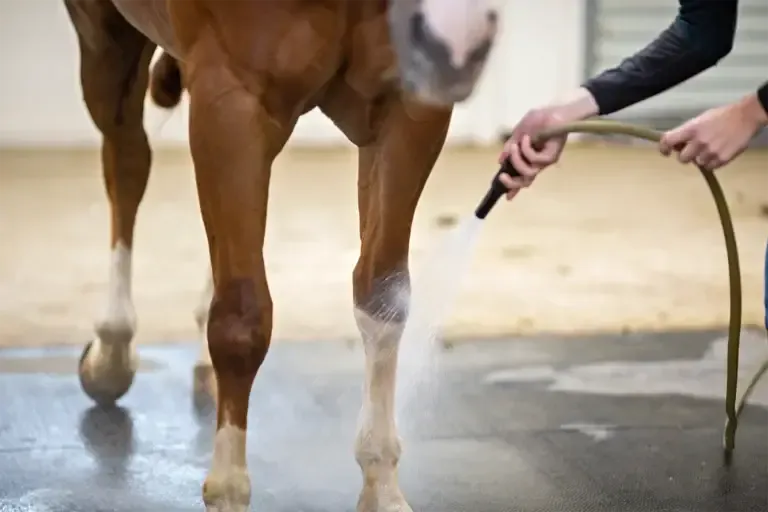
- Spa and hydromassage showers: targeted at localised care of the legs in a static position
- Thalassotherapy pools: using the benefits of seawater during these treatments
The unique power of water
The effectiveness of hydrotherapy rests on four fundamental physical principles:
Buoyancy considerably reduces the weight borne by the joints and bone structures. A horse immersed up to the chest bears only 38% of its body weight, allowing muscle work without excessive strain on the joints.
Water resistance provides progressive, even muscle strengthening, 12 times greater than that of air. This multidirectional resistance engages all muscle groups in a balanced way.
Hydrostatic pressure improves blood and lymphatic circulation, helping to reduce swelling and eliminate metabolic toxins.
The temperature of the water, generally kept between 15 °C and 20 °C, provides a natural pain-relieving and anti-inflammatory effect.
The undeniable benefits for equine well-being
Faster recovery
Equine hydrotherapy is revolutionising post-traumatic care on veterinary advice. The benefits of hydrotherapy for horses are particularly remarkable in recovery from:
Tendon conditions: tendinitis, the scourge of sport horses, benefits from optimised recovery thanks to reduced mechanical strain and improved local blood supply.
Locomotor disorders: rehabilitation of the horse in water, supervised by a veterinarian, allows gradual remobilisation of horses with chronic lameness or joint stiffness.
Post-operative recovery: the aquatic environment makes it easier to resume activity after surgery, while minimising the risk of complications.
A significant reduction in pain and inflammation can be seen from the very first sessions, allowing faster and more complete functional recovery.
Injury prevention
Preventing injuries in horses through hydrotherapy is one of the major strengths of this approach. Aquatic exercise for horses allows:
Even muscle strengthening without traumatic impact, particularly beneficial for the deep and stabilising muscles often neglected in traditional training.
Improved proprioception, the horse’s ability to perceive the position of its body in space, a decisive factor in preventing falls and missteps.
Maintaining optimal physical condition even during periods of enforced rest, avoiding muscle wastage and cardiovascular deconditioning.
Optimising sporting performance
To improve a horse’s performance through hydrotherapy, the benefits are many:
Muscle mass develops in a balanced way, creating functional, harmonious musculature.
Improved cardiovascular endurance thanks to intense but non-traumatic aerobic work.
Optimised suppleness and balance, essential qualities for technical disciplines such as dressage or show jumping.
Some of these treatments must be performed by veterinarians. The training described here focuses on caring for the horse through non-therapeutic well-being hydrotherapy treatments, as required by the law governing this profession.
General well-being and relaxation
Beyond the purely physical aspects, equine hydrotherapy contributes significantly to the psychological well-being of horses. Stress reduction can be seen in lower blood cortisol levels and improved general behaviour. Deep muscle relaxation promotes better sleep and optimised recovery.
The importance of a professional, trained approach
The risks of improvisation
Despite its many benefits, this technique requires sharp expertise. Improvisation can lead to serious complications: drowning, hypothermia, worsening of existing conditions, traumatic stress. And practitioners must, most of the time, work in agreement with the veterinarian to best adapt the hydrotherapy treatments.
Protocols are rigorously established for each clinical case, taking into account the horse’s age, physical condition, pathology and individual reactivity, but also the opinion of the veterinarian, who works hand in hand with the hydrotherapist and who supervises the care plan when it stems from a medical source, or gives their approval in the case of a well-being stay with no therapeutic purpose.
The role of the trained professional
Equine hydrotherapy training is an essential prerequisite for any practitioner wishing to integrate this discipline into their practice. The qualified professional masters:
- Equine anatomy and physiology: understanding of adaptive mechanisms and physiological responses
- Hydrotherapy: analysis of hydrology, hydrotherapy care protocols
- Equipment management: maintenance, safety, setting up the installations
- Complementary applied treatments: muds, seaweed, clays, equine massage
The future of equine hydrotherapy
The development prospects for equine hydrotherapy are promising. The integration of new technologies (physiological sensors, underwater video analysis, artificial intelligence) opens up new possibilities for personalising and optimising protocols.
Conclusion
Equine hydrotherapy today represents a revolution in the holistic approach to well-being and the optimisation of equine performance. Its scientifically documented benefits make it an essential tool for all professionals who want to give their horses the best care.
Investing in quality professional training is therefore an essential prerequisite for fully exploiting the potential of equine hydrotherapy. This approach guarantees not only the safety and effectiveness of the treatments, but also the sustainability and development of this promising discipline.
---
Are you a professional in the equine sector and want to integrate hydrotherapy into your practice? Discover how Physi’eau Marine can support you in this process. Our recognised expertise in hydrotherapy and professional training is the ideal foundation for developing your skills in this field of the future.
Contact us today to explore training options and benefit from our unique know-how in the world of professional hydrotherapy.